
What it is
Most chess teaching asks you to take its word for it
This one does not. Every verdict it gives you is read off a solved endgame table, off a named engine at a stated depth, off the answer the position was recorded with, or off what can be counted on the board, never off an opinion. Where it does not know, it says so and stops.
That sounds like a small thing. It is the whole design. A course that will not guess cannot tell you that you have understood something when you have merely seen it, so the only way forward is the one that actually works: you solve positions, at a stated difficulty, until you are still solving them a week later.
How a step opens
A gate is something you have to prove twice, not a video you have to finish
Each of the 270 nodes is one idea with a gate in front of it. On about a hundred of them, drawn from the puzzle database, the gate is a rating (they run from 800 up to 2350 in Lichess puzzle rating) held over enough attempts that it was not luck. On the rest, where the positions are generated or solved rather than crowd-rated, a rating would mean nothing, so the gate is the skill shown recently: so many of your last so many, or a clean run, or a single measurement. The node tells you which before you start.
Then, whichever it was, the node closes for a few days and asks you again. That second asking is the part no node escapes, and it is the whole difference between having understood something and having understood it on Tuesday.
Nothing else clears a node. Not time spent, not lessons read, not a streak. The one shortcut is the paper on your first visit: twenty positions can start you at Step IV instead of Step I, but it places you past those steps, it does not mark them done, and nothing in your record says you did them.

What is in it
Counted, not estimated
| 18 | steps, from naming the squares to playing at two thousand |
| 270 | nodes, each one idea with its own gate |
| 67,801 | positions from the Lichess puzzle database, tagged by theme |
| 923 | endgame positions solved exactly: never more than six pieces, so the verdict is a table lookup and not an evaluation |
| 298 | lines of dialogue, in the four synthesised voices you meet |
| 819 | plates in the companion book, drawn in the app’s own ink |
| 2,000+ | automated tests, and the counts in this table are among the things they check |
The last row is on this page for the same reason as the rest: it is the part of the thing you cannot see from the outside, and it is the reason the other rows can be stated as facts. One of those tests reads this table and recounts it against the corpus, so a figure here cannot quietly go stale.
The ladder
Eighteen steps, and where you actually are on them
The ladder is the app’s honest register. A node is cleared, slipped, open now, locked, waiting on you, read off your games, or not written yet: seven states, and it says which, with the same vocabulary everywhere. Nothing is marked done because you looked at it.
Fifteen of the nodes from Step XIII on are read off your own games rather than drilled: the course wants evidence only your real games can give, so from there it asks for your Lichess or Chess.com username and reads them. That is the whole of what it asks for; there is no login and no password.
- IThe board and mate in one9 · free
- IIMaterial and the scan13 · free
- IIIThe four tactical motifs21 · free
- IVRemoving the guard18 · free
- VKing and pawn endgames16 · free
- VIIn-between moves and defence14
- VIIRook endgames15
- VIIIPawn structure19
- IXPiece quality16
- XAttacking the king17
- XIProphylaxis14
- XIIImbalances15
- XIIIOpenings as plans14
- XIVConversion13
- XVCalculation15
- XVIEndgame mastery16
- XVIIPractical strength13
- XVIIIThe two thousand12
The five steps marked free are free: 77 nodes. The number after each step is how many nodes it holds.

Who is in it
An old coach, and three people who will not let you win
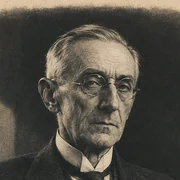
They are written characters, not real players: the portraits are generated and the voices are synthesised. What they say is the part that had to be true, so none of them will tell you a position is winning when it is not, and none of them will praise you for surviving.
The course is taught by Marchetti, who speaks 279 of the 298 lines and does not congratulate you. The strongest thing he ever says is “Good.” At eight points on the ladder you stop drilling and play a full game against one of four opponents, each searching deeper than the last. You do not pass by surviving; a draw is not a pass. You pass by beating them.
Kozlov is built out of your own record. Once the app has diagnosed thirty of your mistakes, from drills or from your own games played back to you, he takes the habit it can punish on a board and plays for it, and until then he will not sit down at all. That refusal is the rule the rest of this page describes, applied to a person: an opponent built to punish nothing in particular would be a name with nobody behind it.
-
 Marchetti
The coach. Also the game you have to win twice: once in the middle of the ladder, once near the top.
-
 Chen
The first real game on the ladder, and again much later. She is in no hurry at all.
-
 Vera
Twice: early, and again for one of the last games in the course.
-
 Kozlov
He needs thirty of your mistakes first, and then he uses them. Twice.
The book
The Ascent
The written half: five parts covering 600 to 2500, with 267 diagrams, 552 exercises and 819 plates, set in the same ink as the app. Nineteen of the twenty-nine chapters name the steps and nodes they cover, so you can read the chapter and then clear the nodes or fail a gate and come back to find out why. The other ten are headed “beyond the app”, and they are: the last two parts go past where the ladder can test you.
It is not a separate product and it is not sold as one. Part I is free with the free steps; the rest comes with the course.
Look at the contents: every chapter, and Part I in full, without an account.
What it costs
Seventy-seven nodes free, then one payment
Steps I to V and Part I of the book are free and stay free: 77 of the 270 nodes, which is the whole 600–1000 band in both halves. That is enough to find out whether this way of working suits you, and it is enough to be worth doing on its own.
The rest is $49 for the first hundred readers and $59 after. One payment, no subscription and no renewal: what you buy is access for as long as the site operates, which is what the terms say. There is a fourteen-day refund, no questions asked, so long as your record shows fewer than ten nodes cleared past the free portion.
Sold by Zachary D. Woods, Foresight Engineering, California. zwoods@4sightengineering.com. Payment is handled by Stripe; this site never sees a card number.
Page views and seven named moments are counted, without cookies or any identifier that outlives the tab, and not at all if your browser sends Do Not Track; the privacy page names the service and what it gets. There is no advertising, and no third-party script runs on any page. Your record lives in your own browser, and in your account if you make one. An account is asked for in two places: when you buy, because the purchase has to be granted to somebody, and whenever you open the paid parts of the book, which are served to your account rather than stored in the app. It is also what lets your record follow you to another device. The privacy page says exactly what is stored and where, and there is a button that deletes it, which also deletes the purchase recorded on it.
Begin
Open it and see
Nothing to install and no account asked for. If you have played before it offers you twenty positions first, and starts you where you belong instead of at “this square is called d4”.
Installs as an app if you want it to, and what you have opened once keeps working with no connection: the lessons, the drills, the board, the voices and Part I of the book. Four things still need one. The paid parts of the book are the exception most readers meet: they are served to your account rather than stored in the app. The endings you play out are graded against a table on another server, so with no signal they adjourn. The nodes read off your own games need those games fetched. And a purchase re-confirms itself every thirty days.